Southeastern Collin County Community
Welcome to Josephine, a Collin County community east of Dallas that pairs its 1888 railroad-town roots with newer home neighborhoods near Lavon Lake.
Josephine is a city in southeastern Collin County, Texas, with a small portion of its limits extending into neighboring Hunt County. It lies on the Blackland Prairies roughly 30 miles northeast of Dallas, about four miles east of Lavon Lake, a reservoir on the East Fork of the Trinity River. The community was established in 1888 along the St. Louis, Arkansas and Texas Railway and was incorporated in 1955, and it has retained its identity as a small Collin County town even as the Dallas–Fort Worth metro has expanded toward it. The city's population now stands near 10,000, a figure that reflects the arrival of new-home communities on former farmland around the original town center. That pattern gives Josephine a distinctive character: a compact railroad-era core and older rural properties sit alongside newer master-planned neighborhoods such as Magnolia Pointe. The result is a community that mixes the space and quiet of the county's eastern edge with the conveniences of suburban development. Josephine is served by Community Independent School District, a district established in 1947 that covers about 89 square miles and also serves the nearby towns of Lavon, Nevada, and Copeville. Farm Roads 6 and 1777 run through the city, and the U.S. Highway 380 corridor to the north connects residents to Farmersville, Princeton, and McKinney, while Rockwall and Wylie offer larger retail and employment centers to the south and west. Lavon Lake provides boating, fishing, and lakeside parks minutes from town, and the Sabine River headwaters and open prairie define the surrounding landscape. For residents, Josephine offers a position on the quieter edge of the Dallas region with straightforward access back into the metro.
Josephine is located in southeastern Collin County, Texas, with a small portion of its city limits extending into Hunt County. It sits about four miles east of Lavon Lake and roughly 30 miles northeast of Dallas.
Josephine is served by Community Independent School District, which was established in 1947 and covers about 89 square miles in southeastern Collin County. The district also serves the nearby towns of Lavon, Nevada, and Copeville.
Josephine sits roughly 30 miles northeast of downtown Dallas. The city is reached via Farm Roads 6 and 1777 and the nearby U.S. Highway 380 corridor, which links it to Farmersville, Princeton, and the broader Dallas–Fort Worth metro area.
Josephine is a short drive east of Lavon Lake, a reservoir on the East Fork of the Trinity River that offers boating, fishing, and lakeside parks. The city also maintains local parks, and the larger retail and dining options of Rockwall and Wylie are within easy driving distance.
Josephine was established in 1888 along the St. Louis, Arkansas and Texas Railway and was incorporated in 1955. The city is named for the daughter of a local landowner who donated land for the community's development.
City Guide
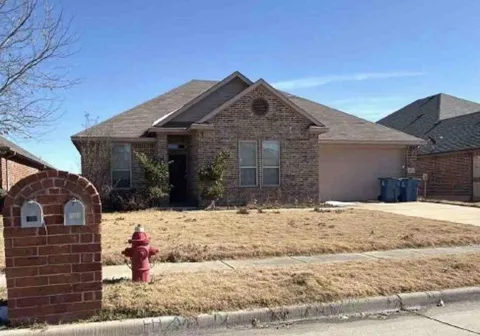
Josephine's housing stock spans two distinct generations. Older homes and rural acreage properties reflect the city's agricultural past, while newer master-planned communities offer single-family homes on the lots that once made up surrounding farmland. Developments such as the Magnolia Pointe and Magnolia neighborhoods provide subdivision streets, community amenities, and new construction of the kind common across Collin County's eastern edge. The mix gives buyers a choice between larger, more established rural properties and contemporary neighborhoods, with most residents owning their homes.
The Magnolia and Magnolia Pointe developments are among Josephine's most visible newer neighborhoods, offering master-planned amenities and elementary-school access within the Community ISD footprint. Older residential streets cluster near the original railroad-era town center, while scattered acreage subdivisions spread across the countryside toward Lavon Lake and the Hunt County line. New-home communities continue to line the Farm Road 6 corridor, which the city has identified for additional retail and mixed-use development. The overall pattern is a small historic core surrounded by expanding residential neighborhoods.
Josephine blends the feel of a longtime Collin County farm town with the conveniences of newer suburban development. Its compact core holds city services and local gathering spots, while new-home communities have brought families and young professionals to the area. Community ISD schools, youth sports, and church and civic organizations anchor local life. Residents do much of their shopping and dining in nearby Farmersville, Royse City, Wylie, and Rockwall, and the city's position east of Dallas keeps both lake recreation and metro amenities within a short drive.
Josephine is served by Community Independent School District, which was established in 1947 through the consolidation of several southeastern Collin County school districts. The district covers about 89 square miles and serves Josephine along with Lavon, Nevada, and Copeville. Community ISD operates elementary, middle, and high school campuses, including Roderick Elementary in Josephine's Magnolia neighborhood, and has expanded its facilities as the area has grown. Students also have access to higher-education options nearby through Collin College, whose campuses serve the wider Collin County region.
Josephine is connected to the Dallas–Fort Worth region primarily by road. Farm Road 6 runs north-south through the city and links to the U.S. Highway 380 corridor, a major east-west route that reaches Farmersville, Princeton, and McKinney. Farm Road 1777 provides local access toward Lavon Lake and neighboring communities. Commuters reach downtown Dallas, roughly 30 miles away, via the U.S. 380 and Interstate 30 corridors, while Rockwall, Wylie, and Royse City offer closer employment and retail centers. The area is car-dependent, with no fixed rail transit in the city.
Lavon Lake, about four miles west of Josephine, is the area's primary outdoor destination, offering boating, fishing, camping, and shoreline parks on the East Fork of the Trinity River. The city maintains local parks and community spaces, and the surrounding Blackland Prairies provide open countryside for walking, riding, and rural recreation. Nearby Farmersville and Royse City host community events and small-town festivals, while Rockwall's Harbor district on Lake Ray Hubbard adds waterfront dining and entertainment within a short drive. For larger-scale recreation, the parks and trails of the Dallas–Fort Worth metro are accessible along the U.S. 380 corridor.
MARKET SNAPSHOT
How homes have been selling here over the last 90 days.
Market data reflects closed sales over the last 90 days and is provided for informational purposes.
BROWSE BY ZIP
Browse listings by postal code in this area.