Lamar County Seat
Welcome to Paris, the Lamar County seat in East Texas, known for its cowboy-hat-topped Eiffel Tower replica and a historic downtown rebuilt after the 1916 fire.
Paris is a city in Lamar County, Texas, serving as the county seat in the northeast corner of East Texas, near the Red River and the Oklahoma border. Its population is roughly 25,000. The city sits about one hundred miles northeast of Dallas, functioning as the commercial and cultural hub for the surrounding rural county. Paris takes its name from the French capital, following a pattern among several American cities. That identity is expressed most visibly in the city's 65-foot replica of the Eiffel Tower, completed in 1993 and topped with a red cowboy hat, which stands as the community's best-known landmark. The downtown reflects a defining event in the city's history: a devastating fire in 1916 destroyed much of the business district, and Paris rebuilt around a formal plaza. The Culbertson Fountain, given to commemorate that rebuilding, anchors the plaza and remains the heart of downtown. History is also preserved at the Sam Bell Maxey House, an 1868 residence now operated as a state historic site, and in the city's Victorian-era and early-twentieth-century architecture. Paris Junior College, established in 1924, anchors higher education and contributes to the community's cultural life. Public schools are provided by several districts, including Paris, North Lamar, Chisum, and Prairiland. Paris' economy is built on regional trade, manufacturing, healthcare, and retail, serving a broad area of northeast Texas. The city offers an affordable, slower-paced alternative to the state's major metros, with a walkable historic core, established neighborhoods, and a strong sense of local identity rooted in its name, its fire-recovery story, and its East Texas setting.
Paris is located in Lamar County, Texas, and serves as the county seat. It sits in the northeast corner of East Texas, near the Red River and the Oklahoma border, about one hundred miles northeast of Dallas.
Paris follows a tradition among American cities named for France's capital. In 1993 the city commissioned a 65-foot-tall replica of the Eiffel Tower, topped with a red cowboy hat, which stands near the downtown area and has become a local landmark.
A major fire in 1916 destroyed much of Paris' downtown, and the city rebuilt around a historic plaza. The Culbertson Fountain, a gift to commemorate that rebuilding, anchors the downtown plaza and remains a central landmark of the city.
Paris sits roughly one hundred miles northeast of Dallas in East Texas, reachable via U.S. Highways 82 and 271 and the Loop 286 bypass. Its location near the Red River places it close to the Oklahoma state line.
The Paris area is served by several school districts, including Paris Independent School District, North Lamar ISD, Chisum ISD, and Prairiland ISD. Paris Junior College, established in 1924, provides higher education in the city.
City Guide
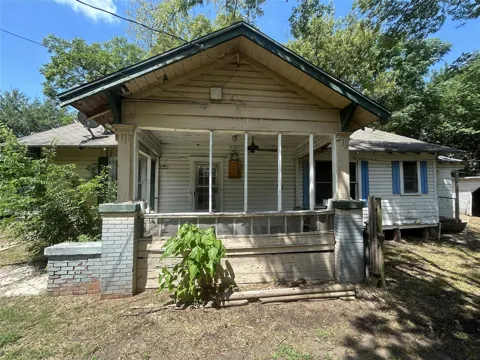
Paris' housing market is characterized by affordability and variety, reflecting its role as a long-established county seat. The city offers historic homes near the downtown and plaza, including residences dating from the early twentieth century, alongside established mid-century neighborhoods and newer subdivisions on the city's edges. Single-family detached homes dominate, and the surrounding Lamar County area adds rural acreage and smaller-town options. Compared with the Dallas-Fort Worth metro, housing costs are substantially lower, making Paris a draw for buyers seeking a slower pace and more space. The market is stable and practical, oriented toward local employment, retirement, and regional trade rather than rapid growth.
Paris is centered on a historic downtown and plaza, where the Culbertson Fountain and early-twentieth-century commercial buildings mark the city rebuilt after the 1916 fire. Established residential neighborhoods with mature trees and a range of early- and mid-century homes surround the downtown, while newer subdivisions extend toward the Loop 286 bypass and the North Lamar area. The presence of multiple school districts means neighborhoods are often identified by their attendance zones, with areas served by Paris ISD, North Lamar ISD, and Chisum ISD distributed across the city and its edges. This structure gives Paris a traditional small-city feel of distinct, established residential sections rather than large planned communities.
Paris offers a classic small East Texas city lifestyle with a distinctive sense of place. The downtown plaza, anchored by the Culbertson Fountain and surrounded by early-twentieth-century buildings, serves as the community's civic and social center, and the cowboy-hat-topped Eiffel Tower gives the city a playful, memorable landmark. Life moves at a slower, more affordable pace than Texas' major metros, with local festivals, a strong high-school sports culture, and the Paris Sports Complex supporting family recreation. Paris Junior College adds educational and cultural activity. The city appeals to those seeking a regional hub with history, community identity, and a low cost of living in northeast Texas.
Public education in Paris is provided by several school districts serving different parts of the city and surrounding area. Paris Independent School District operates Paris High School, Paris Junior High, and its feeder schools primarily within the city limits, while North Lamar ISD, Chisum ISD, and Prairiland ISD serve surrounding sections and communities. This multi-district structure means school assignment varies by address. Paris Junior College, established in 1924, provides two-year higher education and workforce programs for the city and the broader Lamar County region, making Paris an educational hub for northeast Texas beyond its K-12 districts.
Paris is located in northeast Texas, connected to the region by U.S. Highways 82 and 271, which meet in the city, and by the Loop 286 bypass that circles it. Dallas lies roughly one hundred miles to the southwest, reachable via these corridors and connecting highways, while the Red River and Oklahoma border are nearby to the north. The city's position makes it a regional transportation and trade node for Lamar County and surrounding counties. Daily travel is car-dependent, and Paris functions as the highway crossroads of northeast Texas, with freight and logistics playing a role in the local economy alongside its retail and healthcare sectors.
Recreation in Paris centers on its distinctive landmarks and community facilities. The downtown plaza and its Eiffel Tower replica provide a focal point for visitors and events, while the Sam Bell Maxey House offers a window into the city's nineteenth-century history. The Paris Sports Complex supports youth and amateur athletics, and the city's parks and trail areas serve everyday outdoor recreation. Nearby, northeast Texas' lakes, rivers, and woodlands add fishing, boating, and hunting opportunities, and the Red River valley offers additional outdoor space. For residents, recreation combines a walkable historic downtown, organized sports, and access to the region's rural East Texas landscape.
MARKET SNAPSHOT
How homes have been selling here over the last 90 days.
Market data reflects closed sales over the last 90 days and is provided for informational purposes.
BROWSE BY ZIP
Browse listings by postal code in this area.