Hill Country Lavender Capital
Welcome to Blanco, a Hill Country town on the Blanco River, known as the Lavender Capital of Texas and set between Austin and San Antonio.
Blanco is a small city in Blanco County, Texas, set in the central Hill Country along the Blanco River. The Spanish named the river "Blanco" for its white limestone banks in the early eighteenth century, and the community that grew beside it took the same name. Today Blanco sits on US 281 roughly midway between San Antonio and Austin, giving it a rural Hill Country character within reach of two major cities. The town is anchored by its historic courthouse square, around which shops, restaurants, antique stores, and local businesses are arranged. Blanco is widely known as the Lavender Capital of Texas, a title tied to the lavender farms in the surrounding countryside and the annual Lavender Festival held on the square. The city also draws visitors to Blanco State Park, a riverside park established in 1933 and built in part by the Civilian Conservation Corps, which offers swimming, tubing, fishing, and camping along the Blanco River. Blanco's economy is small and locally oriented, mixing agriculture, ranching, tourism, and a growing food-and-drink scene. The Real Ale Brewing Company, founded in Blanco, is among the area's best-known homegrown businesses, and Hill Country wineries and lavender farms add to the town's draw as a weekend destination. Blanco suits residents seeking a quiet Hill Country town with river access, a strong sense of place, and room to spread out, whether in the historic core or on surrounding acreage. It also works for those who want rural living while remaining within a 45-minute to hour-long drive of the employment, cultural, and airport options of San Antonio and Austin.
Blanco is in Blanco County, Texas, in the central Texas Hill Country. It sits along the Blanco River, roughly midway between Austin and San Antonio on US 281. The county seat is nearby Johnson City, not Blanco itself.
Blanco is known as the Lavender Capital of Texas. The area is home to lavender farms such as Hill Country Lavender, and the town hosts an annual Lavender Festival on its historic courthouse square, drawing visitors for markets, farm tours, and local food and drink.
Blanco State Park lies along the Blanco River within the city. Established in 1933 and built in part by the Civilian Conservation Corps, the park offers swimming, tubing, fishing, hiking, camping, and picnicking along the river's white limestone banks.
Public schools in Blanco are part of Blanco Independent School District (Blanco ISD), a rural Central Texas district whose mascot is the Panthers. The district serves students in and around the Blanco area across elementary, middle, and high school campuses.
Blanco sits on US 281 between San Antonio and Austin. It is roughly 45 to 50 miles north of San Antonio and about the same distance west of Austin, with US 281 and US 290 providing a scenic alternative to I-35 between the two cities.
City Guide
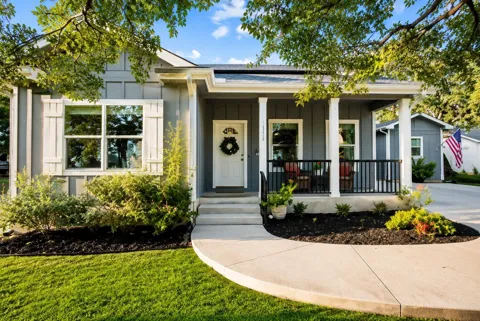
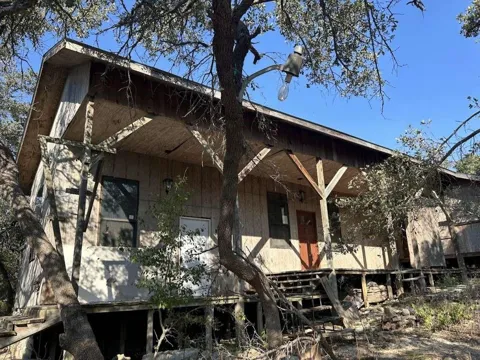
Blanco's housing stock reflects a small Hill Country town with deep roots. The historic core holds older frame and stone homes, some dating to the late nineteenth and early twentieth centuries, clustered near the courthouse square. Farther out, the market shifts to ranch-style houses, Hill Country acreage, and properties with river frontage along the Blanco River. Buyers here are often drawn to larger lots, rural views, and space for animals or workshops, with new construction appearing on the town's edges as the Hill Country's popularity brings growth. The mix ranges from modest single-family homes to larger custom homes on multi-acre parcels, giving Blanco a wider spectrum of property types than a typical suburban town of its size.
Blanco is organized more around its square and riverfront than around large named subdivisions. The historic downtown, centered on the old Blanco County Courthouse, is the heart of town, with older homes on surrounding streets. Neighborhoods along and near the Blanco River offer some of the most sought-after locations, with shade trees and water access. Beyond the core, residential areas give way to ranch properties and acreage lots spread across the surrounding Hill Country, where many residents live on larger tracts rather than in platted communities. As the town grows, newer developments have appeared on its outskirts, but Blanco retains a distinctly small-town, low-density feel throughout.
Blanco's lifestyle revolves around its historic town square and its Hill Country surroundings. The courthouse square anchors the downtown, with shops, antique stores, eateries, and tasting rooms arranged around it, and the Pioneer Museum preserves the area's early history. The town's signature event is the annual Lavender Festival, which fills the square with a market, farm tours, live music, and food and drink, including beer from Blanco's own Real Ale Brewing Company. Nearby lavender farms and Hill Country wineries extend the local food-and-drink scene beyond the square. Day-to-day life is unhurried and community-centered, with the Blanco River and surrounding ranch land shaping a pace that is distinctly rural Texas despite the city's proximity to two major metropolitan areas.
Blanco is served by the Blanco Independent School District, a rural Central Texas district whose teams are the Panthers. The district operates elementary, middle, and high school campuses serving students in Blanco and the surrounding area, and it emphasizes community involvement and a long history of local generations attending its schools. Because the district covers a rural footprint, many students travel from surrounding Hill Country communities. Families in Blanco also have access to private schooling and homeschooling networks common to the region, though the public system remains the primary option. The district's size allows for smaller class settings and close ties between schools, families, and the town.
US 281 runs directly through Blanco as its main street, connecting the town north toward Johnson City and Austin and south toward San Antonio. Combined with US 290, the route offers a scenic and less congested alternative to I-35 between the two cities. San Antonio is roughly 45 to 50 miles south, and Austin is about the same distance to the northeast, placing both within about an hour's drive. The nearest major airports are San Antonio International Airport and Austin-Bergstrom International Airport. There is no local public transit, so residents depend on personal vehicles, with US 281 functioning as the primary regional corridor for commuters and weekend traffic alike.
The Blanco River and Blanco State Park anchor recreation in the city. The state park, established in 1933 and built in part by the Civilian Conservation Corps, offers swimming, tubing, fishing, hiking, camping, and picnicking along the river, with stone dams and pavilions adding to its character. The river itself draws residents and visitors for wading and floating in warmer months. Beyond the water, the surrounding Hill Country provides opportunities for hiking, wildlife watching, and scenic drives, and the nearby Pedernales Falls State Park and Canyon Lake expand outdoor options within an easy drive. The town's annual Lavender Festival and other square-centered events add a social, community-focused layer to the outdoor lifestyle.
MARKET SNAPSHOT
How homes have been selling here over the last 90 days.
Market data reflects closed sales over the last 90 days and is provided for informational purposes.
EXPLORE COMMUNITIES
Browse the neighborhoods and subdivisions in this area.
BROWSE BY ZIP
Browse listings by postal code in this area.