Mid-Cities Sports and Entertainment Hub
Welcome to Arlington, the Tarrant County city between Dallas and Fort Worth that anchors the Metroplex with AT&T Stadium, Globe Life Field, and the University of Texas at Arlington.
Arlington is a large, geographically central city in Tarrant County, Texas, occupying a strategic position in the Mid-Cities corridor between Dallas and Fort Worth. It is one of the three principal cities of the Dallas-Fort Worth-Arlington metropolitan area, the fourth-largest metropolitan region in the United States, and consistently ranks among Texas's largest municipalities. That centrality has shaped nearly every aspect of the city's development, from its transportation corridors to its economy. Historically an agricultural and small-town community, Arlington grew rapidly in the decades after World War II as the Metroplex expanded and major roadways connected the two anchor cities. The arrival of General Motors' assembly plant in the 1950s marked the city's transition toward industry, and later decades brought the University of Texas at Arlington to prominence and, most visibly, the major sports venues that now define the city's national image. Today, Arlington's economy is led by entertainment, tourism, higher education, healthcare, and advanced manufacturing. Arlington is best known to outsiders as the home of AT&T Stadium, where the Dallas Cowboys play, and Globe Life Field, where the Texas Rangers play. These venues, together with Six Flags Over Texas and the Texas Live! entertainment complex, anchor a concentrated sports-and-entertainment district that generates substantial economic activity. The city is also home to the University of Texas at Arlington, a large public research university, and a growing healthcare sector led by Texas Health Resources and other hospital systems. For residents, Arlington offers the conveniences of a big city with the relative affordability and family orientation of a Texas suburb. The population is highly diverse, and the city's neighborhoods span several generations of suburban development, from mid-century ranch homes to modern master-planned communities. Its position between two major downtowns gives residents access to two employment markets, two airport systems, and the full cultural breadth of the Metroplex, all within a short drive.
Arlington is located in Tarrant County, Texas, in the Mid-Cities region between Dallas and Fort Worth. It is one of the principal cities of the Dallas-Fort Worth-Arlington metropolitan area, the fourth-largest metropolitan region in the country.
Arlington is best known as an entertainment destination, anchored by AT&T Stadium, home of the Dallas Cowboys, and Globe Life Field, home of the Texas Rangers. It is also home to the Six Flags Over Texas theme park and the Texas Live! dining and entertainment district.
Arlington is served by several independent school districts, including Arlington ISD, Kennedale ISD, Mansfield ISD, and Fort Worth ISD. The city is also home to the University of Texas at Arlington and Tarrant County College's Southeast Campus.
Arlington sits roughly 20 miles west of downtown Dallas and about 12 miles east of downtown Fort Worth. Its central Mid-Cities location places it between both cities and within convenient reach of Dallas-Fort Worth International Airport.
The University of Texas at Arlington is a public research university with more than 30,000 students, making it one of the larger institutions in the University of Texas System. It offers a broad range of undergraduate and graduate programs.
City Guide
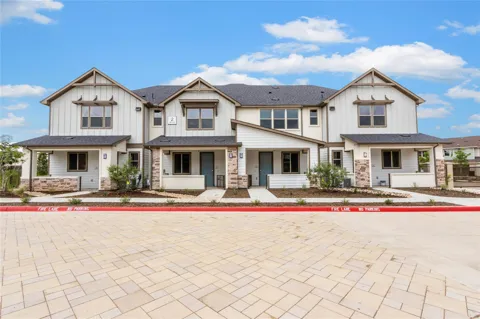
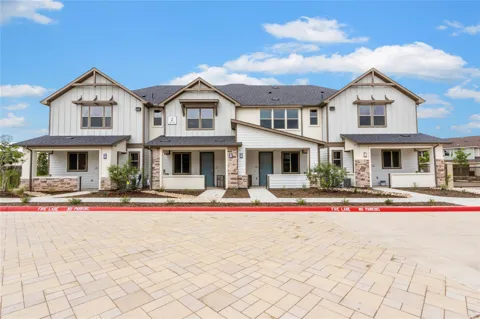
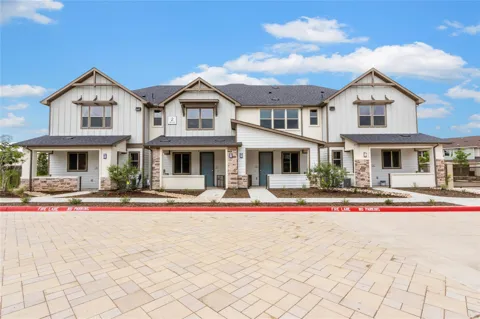
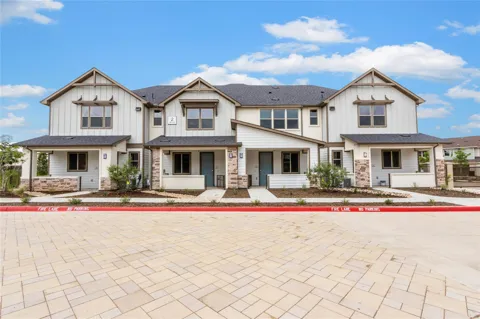
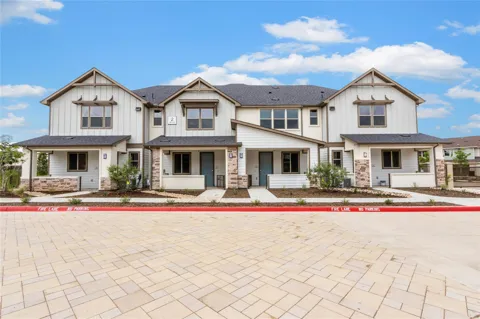
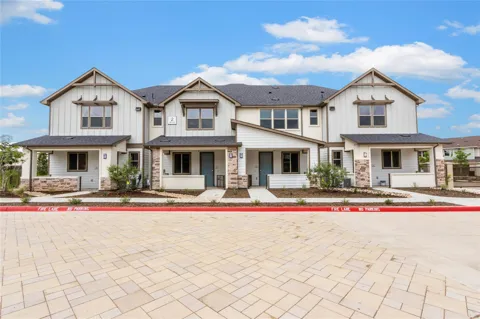
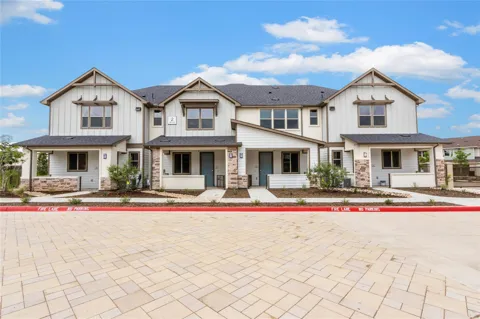
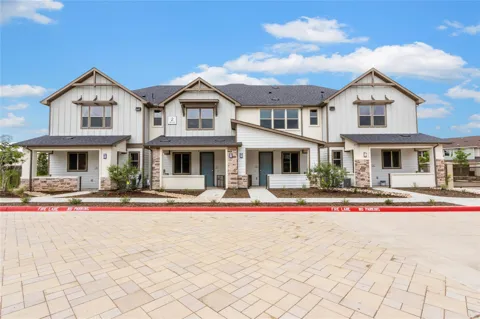
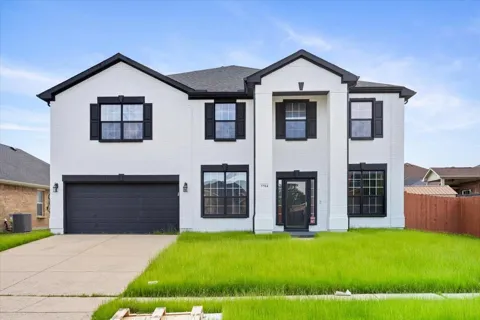
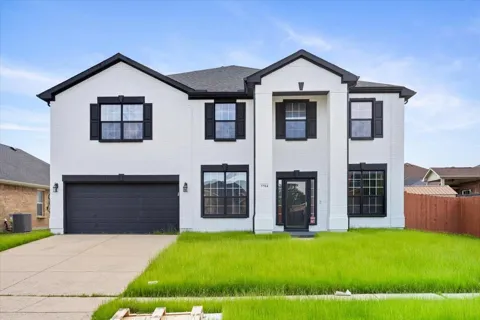
Arlington's housing stock reflects its post-World War II growth. The city is dominated by established single-family neighborhoods built between the 1950s and 1980s, with a strong inventory of brick ranch-style and traditional two-story homes on conventional lots. Mature trees and stable, grid-style subdivisions characterize much of the older core. Newer development has pushed to the northern and southern edges, where master-planned communities and contemporary subdivisions offer larger homes and modern floor plans. Townhomes, patio homes, and apartments add density near the university and entertainment district. The result is a market that spans generations of construction, from mid-century starter homes to newly built executive properties, generally at price points below comparable communities closer to central Dallas, while remaining connected to both halves of the Metroplex.
Arlington's residential areas are commonly described by compass direction. North Arlington, near the entertainment district and River Legacy Park, contains many of the city's newer and higher-end subdivisions as well as established neighborhoods and the Viridian master-planned community along the Trinity River. Central Arlington surrounds the university and offers older, walkable neighborhoods plus student-oriented housing. South and Southeast Arlington feature a mix of established mid-century subdivisions and newer communities, with convenient access to Interstate 20 and Mansfield. Southwest Arlington runs along the Mansfield ISD boundary and includes a range of family-oriented neighborhoods. East Arlington is known for its commercial corridors and diverse housing stock. While neighboring communities such as Pantego and Dalworthington Gardens are separate municipalities, they sit within Arlington's urban footprint and add to the area's variety of home styles and lot sizes.
Arlington's lifestyle is defined by its role as the Metroplex's entertainment capital. The Arlington Entertainment District clusters AT&T Stadium, Globe Life Field, and the Texas Live! complex, which combines dining, live music, and event spaces adjacent to the ballpark and stadium. On game days, the district draws visitors from across North Texas. Beyond the stadiums, the city offers a broad commercial landscape with regional shopping centers, big-box retail, and a growing restaurant scene reflecting the area's diversity. The University of Texas at Arlington contributes a college-town energy to the central and eastern portions of the city, with campus events, arts programming, and a steady supply of student-oriented businesses. Six Flags Over Texas and Six Flags Hurricane Harbor give families major seasonal attractions within city limits, reinforcing Arlington's identity as a place people visit — and increasingly choose to live — for its combination of convenience and entertainment access.
Arlington is unusual in being served by four independent school districts: Arlington ISD, Kennedale ISD, Mansfield ISD, and Fort Worth ISD, each covering different portions of the city. Arlington ISD, the largest of the four, operates numerous elementary, middle, and high schools across the city, while Mansfield ISD serves the southern growth areas and Kennedale and Fort Worth ISDs cover smaller sections. Higher education is a defining feature of the city. The University of Texas at Arlington, a Carnegie-classified research university with more than 30,000 students, is the second-largest institution in the University of Texas System and a major driver of research and workforce development. Tarrant County College's Southeast Campus provides two-year and workforce programs, rounding out a robust educational landscape that supports both K-12 families and the region's labor market.
Arlington's location between Dallas and Fort Worth gives it exceptional highway access. Interstate 20 runs along the southern edge, Interstate 30 crosses the northern and central portions, and State Highway 360 connects the city north-south toward Dallas-Fort Worth International Airport, which sits just to the northeast. Texas State Highway 183 and other arterials complete a grid that makes most of the Metroplex reachable within 30 to 45 minutes. The city is historically auto-oriented, and most residents commute by car. Arlington is served by an on-demand rideshare-style public transit program rather than a traditional fixed-route bus system, and regional transit connections require linking to DART or Trinity Metro rail and bus networks. Dallas Love Field and DFW International Airport both serve air travelers, giving Arlington residents unusually convenient access to two major airports.
River Legacy Park is the centerpiece of Arlington's park system, a 1,300-acre expanse of bottomland forest, wetlands, and prairie along the Trinity River in the city's northwest. It offers miles of paved and natural-surface trails, a dedicated mountain bike trail, picnic pavilions, playgrounds, and river overlooks, along with the River Legacy Living Science Center for nature education. Water recreation centers on Lake Arlington, a roughly 2,300-acre reservoir on the city's west side used for fishing, boating, and lakeside parks, and Lake Viridian within the Viridian community. Six Flags Over Texas and Six Flags Hurricane Harbor provide major amusement and water-park attractions. The city maintains numerous neighborhood parks, sports fields, and community centers, giving residents ample structured recreation across the city.
MARKET SNAPSHOT
How homes have been selling here over the last 90 days.
Market data reflects closed sales over the last 90 days and is provided for informational purposes.
BROWSE BY ZIP
Browse listings by postal code in this area.