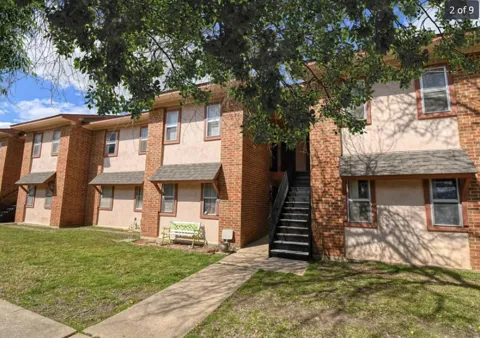
North Denton County Railroad Town
Welcome to Sanger, a former Santa Fe Railroad stop that has grown into a small city in northern Denton County, set along Interstate 35 and minutes from Ray Roberts Lake.
Sanger is a city in north central Denton County, Texas, located along Interstate 35 about ten to twelve miles north of Denton and roughly fifty miles north of downtown Dallas. Founded in 1886 as a stop on the Santa Fe Railroad, the town grew up around the movement of cattle from the ranches of north Denton County and later transitioned into a grain-farming community, with the local mill producing flour under the Silk Finish brand by the late 1890s. That agricultural and railroad heritage still shapes the town's identity today, even as its position in the fast-growing Dallas–Fort Worth region has drawn new residents seeking a smaller, quieter setting within commuting distance of larger job centers. The city's population, roughly 10,000 residents, has grown steadily as the North Texas suburbs have pushed northward along the Interstate 35 corridor. Sanger pairs a compact, walkable historic downtown with newer residential development and scattered acreage on its edges, giving it a character that mixes small-town Texas with the conveniences of metro-area access. The community is served by the Sanger Independent School District, and its chief recreational anchor is Ray Roberts Lake, a large reservoir and state park complex that lies just east of town and provides year-round outdoor recreation. Sanger suits people who want an affordable, family-oriented small city with a genuine main-street feel and easy access to Denton, the DFW airport area, and Dallas. Its location on Interstate 35 makes north-south travel simple, while Farm-to-Market roads connect the surrounding countryside. For residents, daily life balances local schools, downtown businesses and events, and quick trips to the lake, with the larger cultural and employment offerings of the Metroplex never far away.
Sanger is in Denton County, in north central Texas. The city lies in the northern part of the county, along Interstate 35 about ten to twelve miles north of Denton and roughly fifty miles from downtown Dallas.
Sanger is about ten miles north of Denton and roughly fifty miles north of downtown Dallas along Interstate 35. It sits at the northern edge of the North Texas suburban corridor and is part of the Dallas–Fort Worth metropolitan area.
Sanger is served by the Sanger Independent School District, which operates eight schools and enrolls about 2,800 students. The University of North Texas and Texas Woman's University are located nearby in Denton.
Sanger is known for its history as an 1886 Santa Fe Railroad stop, its restored historic downtown, and its proximity to Ray Roberts Lake, a large reservoir and state park that offers boating, fishing, camping, and trails just east of the city.
Yes. Sanger is part of the Dallas–Fort Worth metropolitan area, positioned along Interstate 35 at the northern edge of the North Texas suburban corridor. It combines a small-town setting with convenient freeway access to Denton and the wider Metroplex.
City Guide
Sanger's housing stock reflects its evolution from railroad and farm town to North Texas commuter community. Older, established homes sit near the historic downtown on traditional town lots, while newer subdivisions have developed along the Interstate 35 and FM 455 corridors as the city has grown. Larger acreage properties and rural homesites remain common on the town's outskirts, offering space and a country feel within a short drive of the city core. The mix spans modest older houses, mid-century builds, and newer single-family homes, giving buyers a broad range of lot sizes and styles. Because Sanger sits just north of Denton along a major freeway, it attracts households looking for more space or a quieter pace than denser suburban cities, while still keeping Denton and the broader Metroplex within reach.
Sanger's residential pattern falls into a few broad areas. The historic downtown and the streets immediately around it hold the city's oldest homes and its civic heart, while established neighborhoods extend outward from that core. To the east and south, newer subdivisions such as those near Quail Run Park have been added along the FM 455 and Interstate 35 corridors, reflecting the town's recent growth. Beyond the incorporated limits, scattered acreage and rural homesites give the area a distinctly country character. Rather than large master-planned communities, Sanger is defined by a collection of smaller, often family-oriented neighborhoods surrounding a true small-town center, a layout that keeps the community feeling connected and accessible.
Sanger's lifestyle is anchored in its historic downtown, where reinvestment has brought restaurants, boutiques, and small businesses into a classic Texas main-street setting. The local food scene leans toward comfort food, barbecue, and Tex-Mex, served in casual, family-run spots. Community life is organized around a steady calendar of events, including the annual Freedom Fest celebration and a seasonal downtown farmers market featuring local growers and makers. The city promotes an active, family-oriented culture through youth sports, concerts, and holiday gatherings. There is a strong sense of small-town pride here: residents know their neighbors, support local merchants, and gather regularly for civic events, while enjoying the convenience of nearby Denton's university-town amenities and the larger attractions of the Metroplex.
Sanger is served by the Sanger Independent School District, a single-town district that operates eight schools and enrolls roughly 2,800 students across elementary, middle, and high school levels. The district's scale gives Sanger the feel of a close-knit school community where families are often connected across campuses and grade levels. Its presence anchors local identity in the same way the railroad and the downtown do. For families evaluating the area, the district offers the full K-12 progression within the city, with extracurricular programs tied to the community's strong local culture. Higher education is nearby as well, with the University of North Texas and Texas Woman's University both located in Denton, a short drive south along Interstate 35.
Sanger's location on Interstate 35 is its defining transportation asset. The freeway runs north-south through the region, placing Denton about ten miles to the south and downtown Dallas roughly fifty miles away, with Fort Worth also reachable via the wider Metroplex freeway network. Farm-to-Market Road 455 runs east from the city toward Ray Roberts Lake and the Greenbelt corridor, while other farm-to-market roads fan out into the surrounding countryside. The Dallas Area Rapid Transit rail system reaches Denton, but Sanger itself remains a car-dependent community typical of the region's smaller cities. The town's position at the northern edge of the suburban growth corridor means commuters can reach employment centers in Denton and the northern Metroplex relatively quickly, while still returning to a slower-paced home base.
Ray Roberts Lake is the centerpiece of outdoor recreation around Sanger. The reservoir's state park has multiple units, including the Johnson Branch, Isle du Bois, and Jordan areas, offering camping, boating, fishing, swimming, and miles of hiking, biking, and equestrian trails, with the Greenbelt Corridor stretching south toward Lake Lewisville. The full-service Lake Ray Roberts Marina sits at Sanger, and the lake is reached from town by FM 455, just a few miles east. Within the city, Sanger maintains more than eighty acres of parkland, anchored by the Sanger Sports Park with athletic fields, a fishing pond, playground, picnic areas, and a walking trail. Together, the state park, the local park system, and a calendar of community events give residents strong, close-to-home options for outdoor and family recreation.
MARKET SNAPSHOT
How homes have been selling here over the last 90 days.
Market data reflects closed sales over the last 90 days and is provided for informational purposes.
BROWSE BY ZIP
Browse listings by postal code in this area.