Historic Central Texas County Seat
Welcome to Comanche, the county seat of Comanche County and a historic hub of Central Texas ranching and agriculture.
Comanche is a city and the county seat of Comanche County in west-central Texas, sitting in rolling terrain at the southern edge of the Grand Prairie region. The Texas legislature formed Comanche County from Coryell and Bosque counties in 1856, and Comanche became the county seat in 1859. Its courthouse square has anchored the community ever since, surrounded by a compact downtown of historic commercial buildings and landmarks such as the Fleming Oak, tied to the area's frontier history. Agriculture and ranching have long been the backbone of the local economy. Comanche County is known for dairy farming, pecans, beef cattle, meat goats, peanuts, and forage production, and the county's extension programs and livestock events keep that heritage close to daily life. The climate is humid subtropical, with hot, humid summers and generally mild winters, well suited to the long growing season that supports the area's farms. Comanche offers a quiet, small-town pace. The historic courthouse and its square serve as the gathering point for community life, while Lake Proctor, just outside town, draws boaters, anglers, and campers. Residents rely on the city's independent school district, Comanche ISD, and on a Main Street-style retail core for everyday needs. For larger shopping, medical care, and employment, the city is within reach of the Interstate 35 corridor and regional hubs in Central and North Texas. The community tends to attract families, retirees, and people tied to agriculture who value open space, a low cost of living, and a close-knit, rural character over urban amenities. It is a place defined less by growth than by continuity, where the courthouse square and the surrounding ranch country still set the tone.
Comanche is the county seat of Comanche County, in west-central Texas. The county was formed in 1856 from parts of Coryell and Bosque counties, and Comanche became the county seat in 1859.
Comanche is known as a historic Texas county seat with a notable courthouse square and landmarks such as the Fleming Oak, and as a center of ranching and agriculture. The surrounding county produces dairy, pecans, beef cattle, meat goats, and peanuts, and nearby Lake Proctor offers boating, fishing, and camping.
Comanche is served by Comanche ISD, an independent school district that covers the city and much of the surrounding rural area of Comanche County. The district operates elementary, middle, and high school campuses, and as a rural West-Central Texas district it draws students from a wide geographic attendance area.
Lake Proctor, with more than 4,000 acres of water and parkland, offers boating, fishing, swimming, and camping. In town, visitors can explore the Comanche County Courthouse and the historic Fleming Oak on the square, and the surrounding ranch country supports horseback riding and other outdoor activities.
City Guide
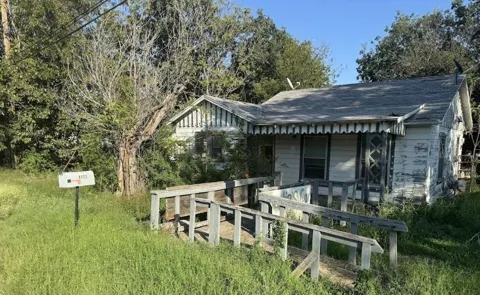
Housing in Comanche spans a historic core and a rural fringe. Near the courthouse square, the stock includes older wood-frame and brick homes on tree-lined streets, many dating to the early twentieth century. Beyond town, the pattern shifts to modest homes on larger lots, ranchettes, and working acreage where residents keep livestock or hay ground. The market leans toward affordability and land rather than new subdivisions, with buyers often seeking space, outbuildings, and quiet rather than dense amenities. Property choices range from in-town bungalows to multi-acre tracts suitable for horses or small cattle operations.
Comanche's defining district is its downtown, built around the historic Comanche County Courthouse and the square, where the Fleming Oak and a cluster of commercial buildings recall the town's frontier beginnings. Residential streets fan outward from that core in quiet, established blocks of older homes. There are no large master-planned subdivisions; instead, the community gives way gradually to ranch land and farm country in every direction. The overall feel is of a traditional Texas county seat, where the square remains both the geographic and social center.
Life in Comanche revolves around the courthouse square, local churches and schools, and the agricultural calendar. Livestock shows, extension programs, and community gatherings reflect a culture rooted in farming and ranching, while the downtown offers small shops and cafés for everyday needs. Lake Proctor brings a recreational rhythm of boating, fishing, and camping on weekends. The pace is unhurried and neighborly, and residents tend to prize self-reliance and open space. For broader retail, dining, and medical services, people commonly travel to larger towns in the region.
Comanche is served by Comanche ISD, an independent school district covering the city and much of the surrounding rural area of Comanche County. The district operates elementary, middle, and high school campuses and emphasizes a full range of extracurricular and career programs for its students. As a rural West-Central Texas district, it draws from a wide geographic attendance area. Families also have access to regional higher education through community colleges and universities in Central Texas within commuting distance.
Lake Proctor is the area's primary outdoor destination, offering more than 4,000 acres of water and surrounding parkland for boating, swimming, fishing, and camping, with additional hunting and wildlife opportunities nearby. In town, the Comanche County Courthouse and the Fleming Oak on the square draw visitors interested in Texas frontier history, and the downtown serves as the setting for community events. The surrounding ranch country supports horseback riding, hiking, and seasonal outdoor recreation, giving the area a distinctly rural rhythm through the year.
MARKET SNAPSHOT
How homes have been selling here over the last 90 days.
Market data reflects closed sales over the last 90 days and is provided for informational purposes.
BROWSE BY ZIP
Browse listings by postal code in this area.